Wildlife
Understanding the Great Wildebeest Migration
DerrickJune 13, 2026
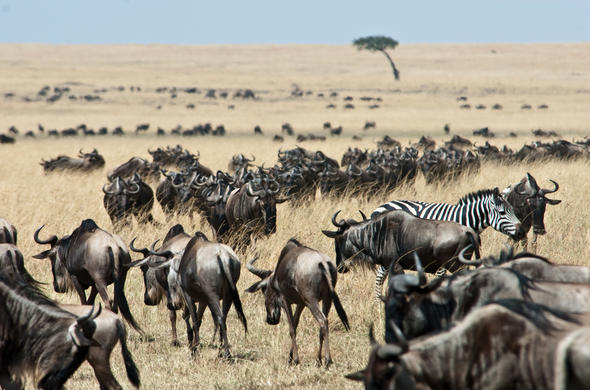
The Great Wildebeest Migration is widely considered to be one of the greatest natural spectacles on the planet. Every year, over two million wildebeest, zebras, and gazelles travel in a continuous clockwise circle through the Serengeti ecosystem in Tanzania and the Maasai Mara National Reserve in Kenya, driven by the search for fresh grazing lands and reliable water sources.
The Annual Cycle
Unlike what many believe, the migration is not a single event, but a continuous, year-round journey.
- January to March (Calving Season): The herds congregate in the southern Serengeti and Ngorongoro Conservation Area. This is the calving season, where up to 8,000 calves are born every single day. This abundance of vulnerable prey attracts the highest concentration of predators in Africa.
- April to June (The Trek North): As the southern plains dry up, the massive columns of animals begin marching north and west towards the Grumeti River.
- July to October (The River Crossings): This is the most dramatic phase of the migration. The herds must cross the treacherous, crocodile-infested Mara River to reach the lush grazing grounds of Kenya's Maasai Mara. Watching thousands of wildebeest plunge into the rushing water is an unforgettable, heart-pounding experience.
- November to December (The Return South): With the arrival of the short rains in the south, the herds turn around and trek back down to the Serengeti plains, completing the cycle.
Best Time to Visit
If you want to witness the dramatic river crossings, plan your safari between July and September in the northern Serengeti or Maasai Mara. If you prefer lush landscapes and predator action, visit the southern Serengeti between January and March.
Tags:Great MigrationSerengetiMaasai MaraWildlife